|
Information about locks themselves. Questions, tips and lock diagram information should be posted here.
Moderators: zeke79, keysman
by MacGyver101 » Sun Oct 02, 2011 11:37 am
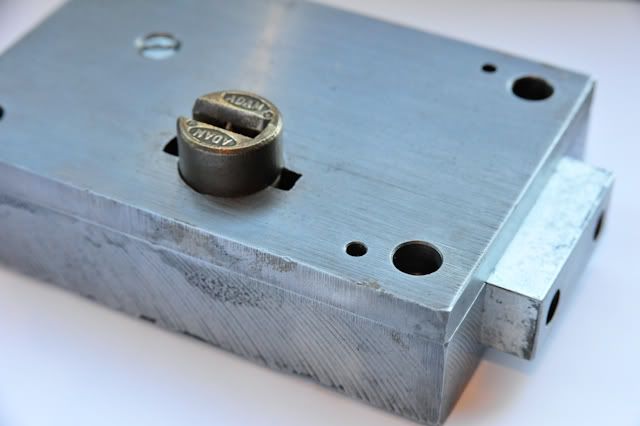
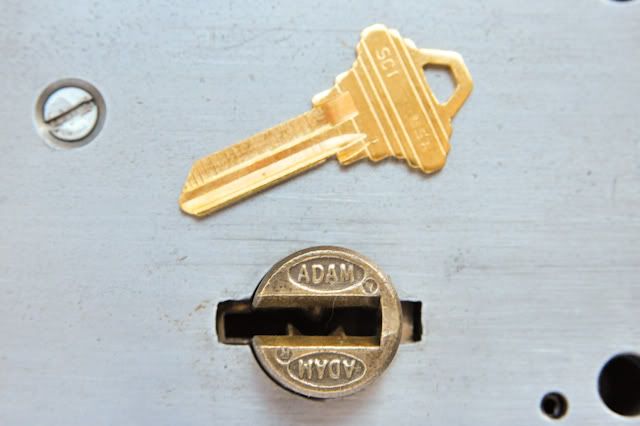
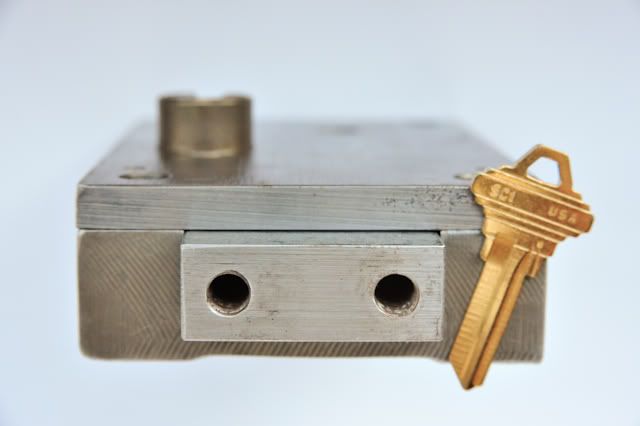
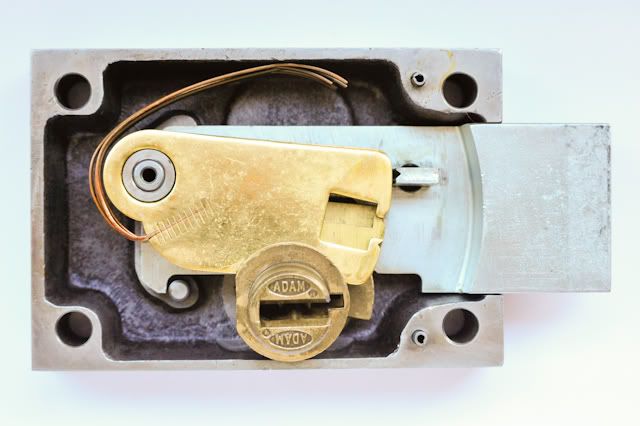
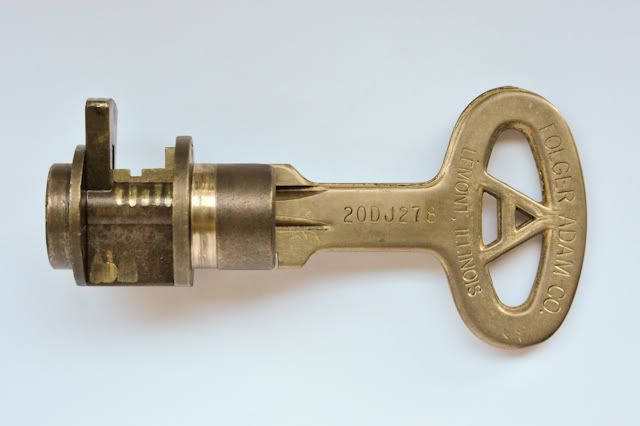
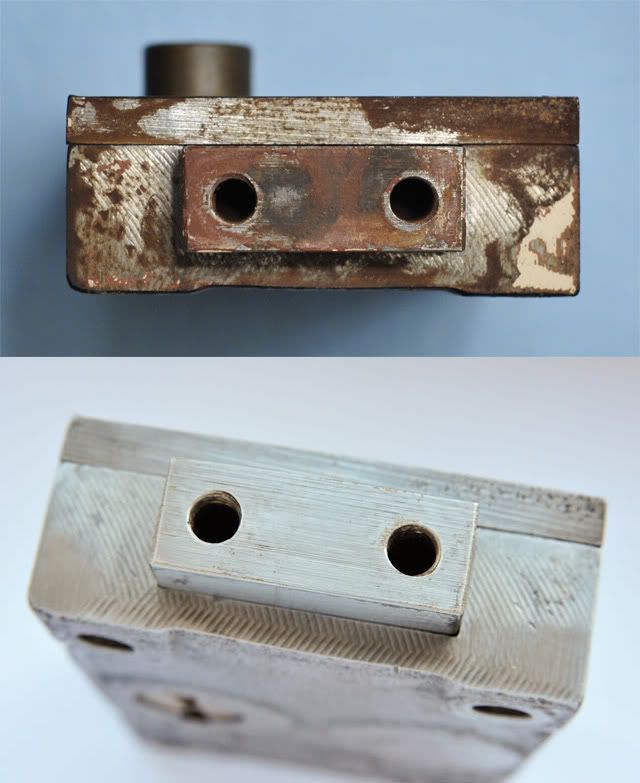
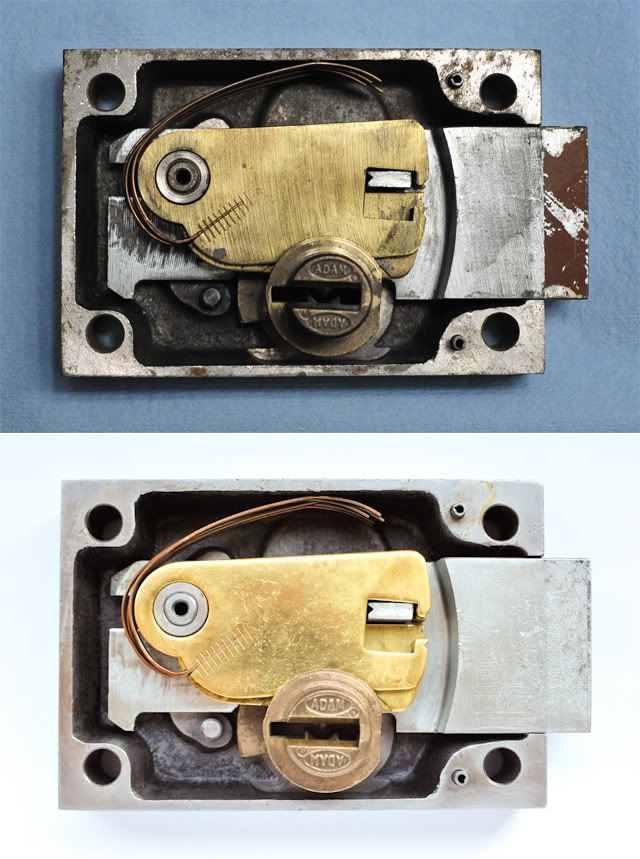
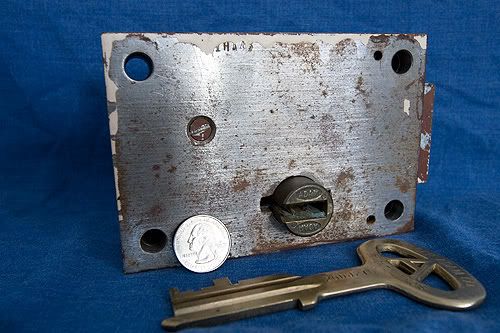
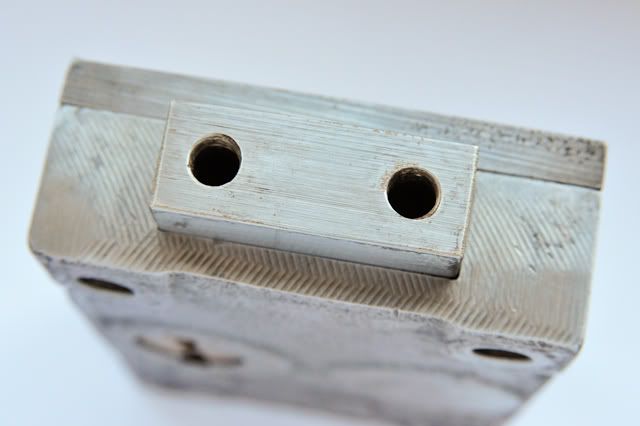
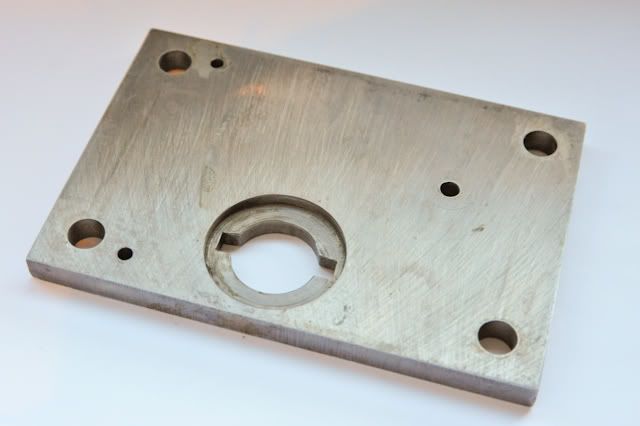
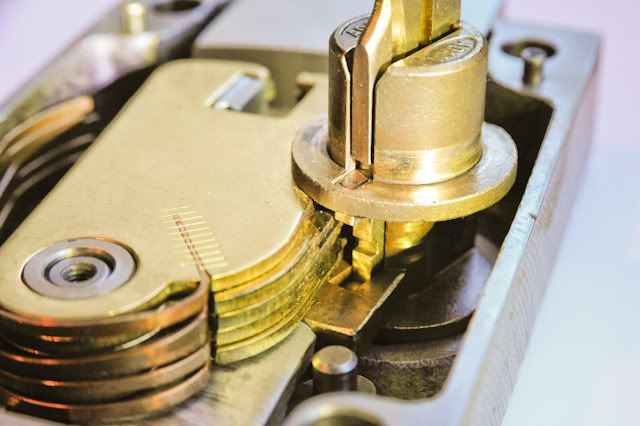
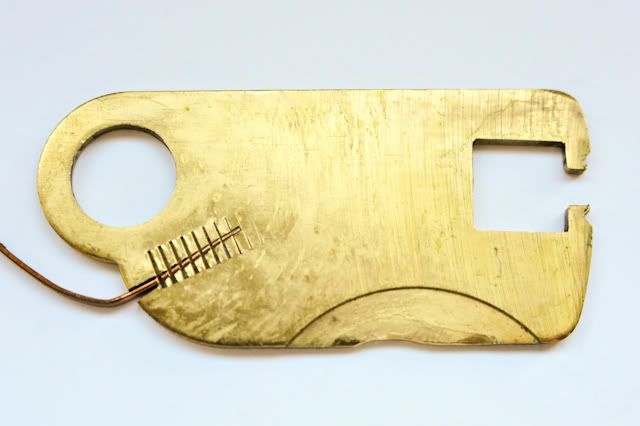
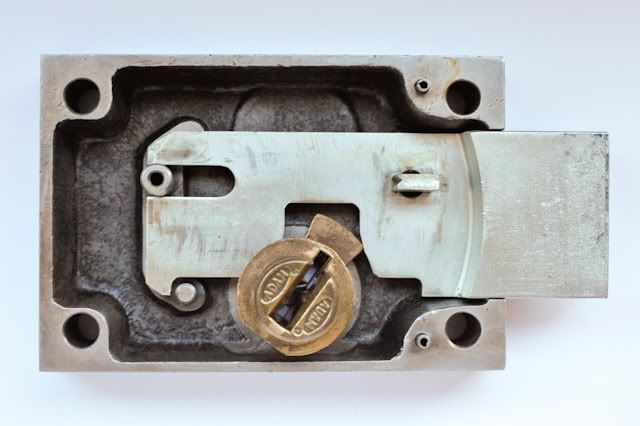
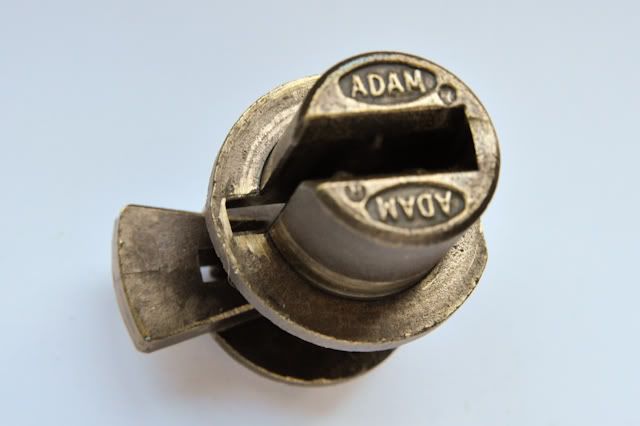
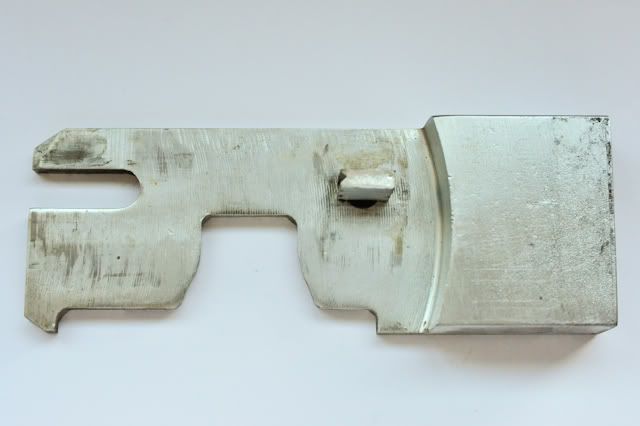
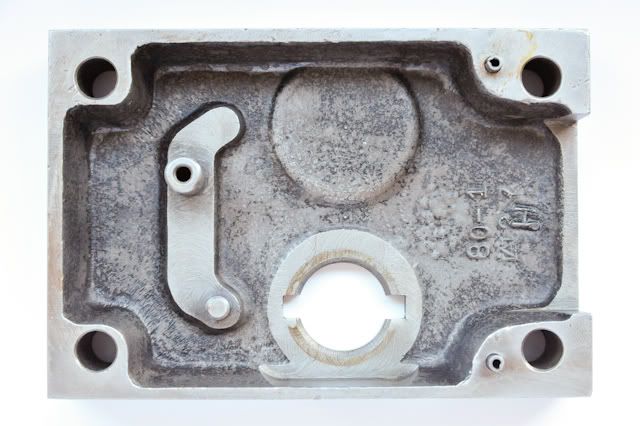
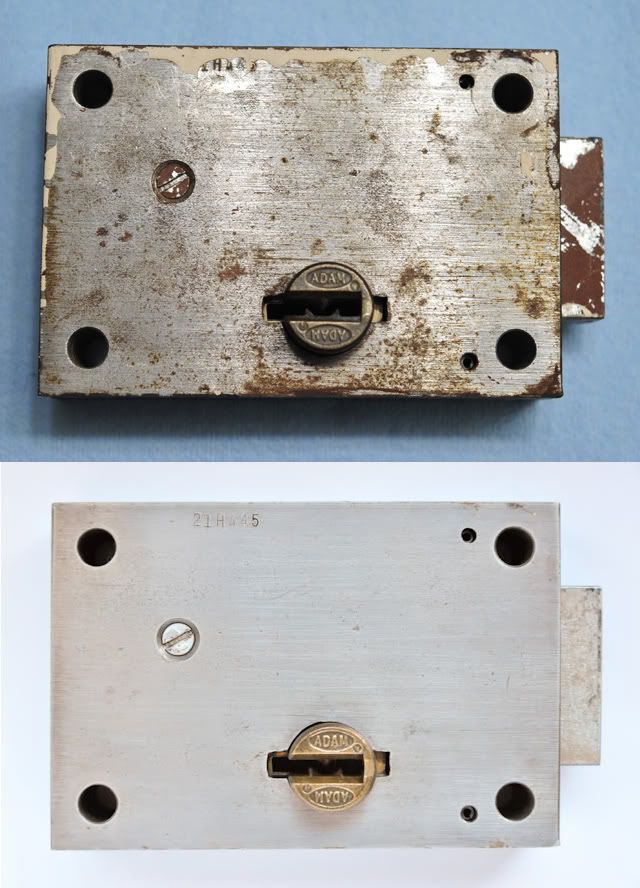
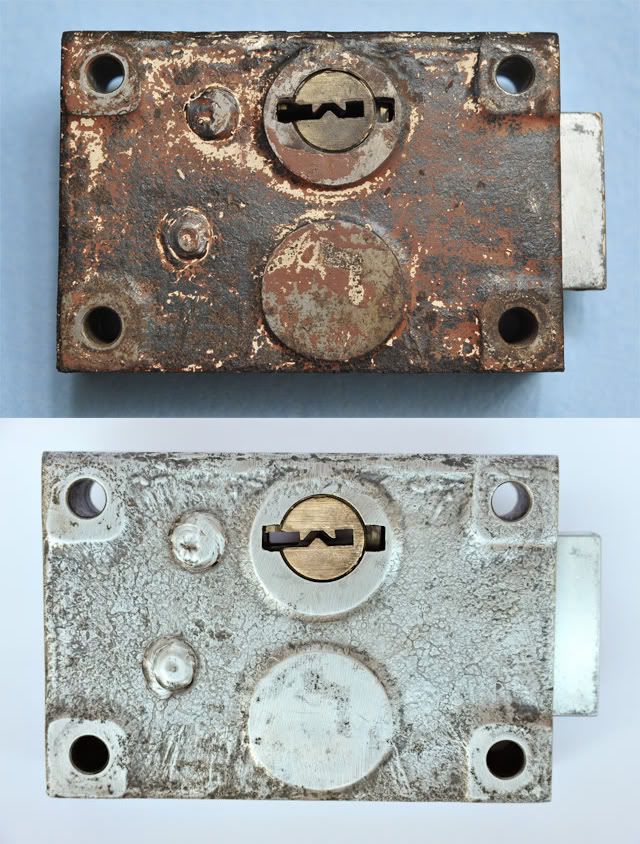
This has been an ongoing project for a while, which I've finally managed to get some photos of. This project started a couple of years ago, when Urbex acquired a pile of old Folger Adams Model 82 jail cell locks that had been removed from a recently-renovated prison, and a Folger Adam key from eBay. After years of service, the lock was rusted, painted and filled with dirt and old grease. After several weeks of careful cleaning, paint stripping, polishing and a few chemical chelation baths it's been restored, oiled and sealed back to a mostly-new state.  This is a huge lock. I've placed a standard Schlage SC1 blank next to the key and keyway, for a size reference: Similar to a number of safe locks, the bolt is drilled and tapped, and can have other boltwork mechanisms attached to it: The lock would normally be mortised into a cell door or passage door. A single screw holds the top-plate in place. This lock is clearly meant to withstand a significant amount of abuse; the front plate and bottom are just shy of 1/2" thick: With the cover removed, the lever pack and bolt stump are clearly visible: A warded plug accepts the key and aligns it with the lever pack: The levers themselves are huge, shown here again with a Schlage SC1 blank for reference: Each lever is individually sprung, with a bronze spring permanently crimped into it: The levers pivot on a small aluminum sleeve that acts as a bearing to help them rotate smoothly: Once the levers are removed, the plug and bolt can then be removed: The plug is one single cast piece, and includes both the keyway warding and also a tongue which does the work of throwing the bolt: The stump on the bolt is notched; it will catch the "anti-pick" protrusions on the levers: As with the top plate, the sides and back of the lock body are also made from heavy steel, to resist fairly extreme physical attacks: This was one of my more fun restoration projects, given both the design of these locks and the history of where they've been used. While these locks are still in use (Oliver Diederichsen posted some pictures of a current model in a Guantanamo Lock thread on his blog), they are very hard to come by in original condition: Folger Adam restricts sale of new ones to prison and military applications. My thanks, again, to Urbex for his help in bringing this project together!

-
MacGyver101
-
- Posts: 1456
- Joined: Thu Jun 22, 2006 3:40 am
- Location: Toronto, Canada
by femurat » Sun Oct 02, 2011 2:18 pm
Hey MacGyver, you are a very talented man! This lock looks like new Great pictures, clear and complete explanation... thanks for sharing 
-
femurat
-
- Posts: 1568
- Joined: Mon Sep 22, 2008 10:06 pm
- Location: Italy
by the picker » Mon Oct 03, 2011 4:31 am
very nice lock sure is a big bugger. great job on the restoration 
-
the picker
-
- Posts: 8
- Joined: Sun Oct 02, 2011 5:54 am
by Legion303 » Mon Oct 03, 2011 7:46 am
Those are some gorgeous pictures. Let me know if you're selling any of the locks. :)
-steve
-
Legion303
- Moderator
-
- Posts: 2215
- Joined: Sat May 06, 2006 7:52 pm
- Location: Denver, CO
by mhole » Tue Oct 04, 2011 5:18 am
Lovely lock, and beautifully restored. I love the way you've cleaned it up whilst retaining all the original machining and casting marks.
I think they part you're describing as the plug would more accurately be called a curtain or bolt thrower, it seems to be functionally more or less identical to the curtain used in many British lever locks.
-
mhole
-
- Posts: 392
- Joined: Mon Jul 02, 2007 3:36 am
by MacGyver101 » Tue Oct 04, 2011 6:05 am
Thanks for the kind words, folks. Some of these restoration projects become a bit of a labour of love... this one I really enjoyed doing, but I don't want to even start calculating the number of hours that were spent gently soaking off paint residue and rust, hand-polishing several square feet of heavily-tarnished metal, etc.. I really enjoy being able to bring back the beauty and function of these old locks -- digging out their history from under 100 years of rust, paint and grime. (Some historical pieces shouldn't be cleaned to this extent, as the wear and patina is an important part of their history... but that wasn't really the case here.) mhole wrote:I think they part you're describing as the plug would more accurately be called a curtain or bolt thrower, it seems to be functionally more or less identical to the curtain used in many British lever locks.
Ah, interesting. I have to admit having never heard the term "bolt thrower" before -- and I always assumed that the "curtain" referred to just the rim on the plug that occludes the keyway. You learn something new every day!  Thanks!

-
MacGyver101
-
- Posts: 1456
- Joined: Thu Jun 22, 2006 3:40 am
- Location: Toronto, Canada
by mh » Tue Oct 04, 2011 12:22 pm
very nice pictures!
Do incorrect keys lift all the levers to the (rather thin*) false notch area?
(* when compared to the other parts of the lock)
Cheers mh
"The techs discovered that German locks were particularly difficult" - Robert Wallace, H. Keith Melton w. Henry R. Schlesinger, Spycraft: The secret history of the CIA's spytechs from communism to Al-Qaeda (New York: Dutton, 2008), p. 210
-
mh
- Moderator
-
- Posts: 2004
- Joined: Fri Mar 03, 2006 5:32 pm
- Location: Germany
-
by MacGyver101 » Wed Oct 05, 2011 5:18 am
mh wrote:Do incorrect keys lift all the levers to the (rather thin*) false notch area?
Hrm... an excellent question. I'll have to measure the distance between a "0" cut and the deepest cut on the key and check. (I don't have a reference for the "official" cut depths, but it's easily measured from the curtain.)
-
MacGyver101
-
- Posts: 1456
- Joined: Thu Jun 22, 2006 3:40 am
- Location: Toronto, Canada
by Urbex » Wed Nov 16, 2011 2:56 am
That came out AMAZING!
-
Urbex
-
- Posts: 106
- Joined: Sat Feb 16, 2008 1:30 pm
- Location: Eastern MA USA
by MacGyver101 » Fri Nov 18, 2011 1:10 pm
Urbex wrote:That came out AMAZING!
Thanks so much for your help in getting it together!  I was digging around and found some more of the pictures from before the restoration work. _________________________________________ _________________________________________ _________________________________________
-
MacGyver101
-
- Posts: 1456
- Joined: Thu Jun 22, 2006 3:40 am
- Location: Toronto, Canada
by scriptguru » Sat Nov 26, 2011 5:03 pm
Thank you very much for infortmative topic! I am sorry for non-informartive post, but the photos you have uploaded are just great and very rare (taking into account my own experience). I've never seen lever locks with keyways similar to pin tumblers, it's very cool!
-
scriptguru
-
- Posts: 100
- Joined: Fri Oct 29, 2010 3:50 am
- Location: Burnaby, British Columbia, Canada
-
by rphillips52 » Thu Dec 01, 2011 2:20 am
Congratulations on an excellent restoration job, with clear photographs having some scale included. A suggestion: this sort of cleaning job would be suitable for electolytic cleaning, which would have saved you much time and effort. As someone has pointed out, the 'plug' is indeed a combined barrel and curtain and bolt thrower. These three elements were invented separately, but found to be more effective when combined. Bulleted keyways are not common on lever locks, but are not unique to your type, though they have in the past mostly been used in locks taking flat keys. E.g., several US and British safe deposit locks have used such bulleted bolt throwers. As a small aside, these locks have never been used in Britain. A rep demonstrated them to the Home Office prison dept. years ago, in an attempt to win an order. But a civil servant on the panel assessing these locks swung one of the keys, and remarked that it could 'really do some damage in the wrong hands'. That killed any idea of adopting them in British prisons; the rep abandoned his whole batch of samples into the hands of a British lock collector in the West Country, and returned to the USA empty handed - no samples, no orders. And there has never been any other export attempt here since. British mechanical locks for heavy-duty cell use are typically trigger-action, and often use a handle to withdraw the bolt, a small key merely unlocking it - like a safe door. This is a modern version http://www.clcsltd.co.uk/en/site/clcs/P ... ks/4L5556/
-
rphillips52
-
- Posts: 29
- Joined: Thu Dec 01, 2011 12:20 am
by MacGyver101 » Thu Dec 01, 2011 8:06 am
rphillips52 wrote:Congratulations on an excellent restoration job, with clear photographs having some scale included. A suggestion: this sort of cleaning job would be suitable for electolytic cleaning, which would have saved you much time and effort.
Thanks: I had a lot of fun with this one. I'd considered an electrolytic bath, but ended up using a chemical chelation solution instead (just happened to be more readily at hand). Either technique was thwarted, though, by the amount of old paint that had accumulated over some of the rustier spots: it required a lot of work to get it out of various cracks and crevices (serial numbers, etc.)... and, sadly, this lock was far too big for my ultrasonic cleaning tank. rphillips52 wrote:A rep demonstrated them to the Home Office prison dept. years ago, in an attempt to win an order. But a civil servant on the panel assessing these locks swung one of the keys, and remarked that it could 'really do some damage in the wrong hands'. That killed any idea of adopting them in British prisons; the rep abandoned his whole batch of samples into the hands of a British lock collector in the West Country, and returned to the USA empty handed - no samples, no orders. And there has never been any other export attempt here since.
Ha... that's a neat bit of history. (And a good observation on the part of the Home Office folks.)

-
MacGyver101
-
- Posts: 1456
- Joined: Thu Jun 22, 2006 3:40 am
- Location: Toronto, Canada
by Taemyks » Sat Dec 03, 2011 12:09 pm
That is a really pretty lock. I'm hoping to come across something like that at my recycling center  What a wonderful piece of history too. About a decade and a half ago I was in LA and several of the street vendors were offering keys like that they said would open this or that county lockup... I thought it was a joke as they keys looked like clubs. Makes me  now!
-
Taemyks
-
- Posts: 18
- Joined: Fri Nov 25, 2011 1:14 pm
- Location: Oregon, USA
by Fa1c0n » Tue Dec 06, 2011 9:10 pm
That's a beautifull piece of history! awesome breakdown to
-
Fa1c0n
-
- Posts: 1
- Joined: Thu Dec 01, 2011 10:33 pm
Return to Locks
Who is online
Users browsing this forum: Google [Bot], Google Adsense [Bot] and 6 guests
|